Is That Clark English School Licensed?
You've found a school online with a nice website, a fast reply, and a tempting price. But you're about to send money and book a flight to a country you've never visited, to an institution you can't walk into and inspect. So the question that keeps you up at night is simple: is this place even legal?
It's a fair worry, and it's one of the most-searched concerns among first-time adult learners heading to the Philippines. The good news is that verifying a school takes minutes, not months — and once you know what to check, the fear mostly disappears.
To see which school fits which goal, compare the best English schools in the Philippines — 8 licensed schools in Clark.
Why licensing actually matters here
In the Philippines, a language school that enrolls foreign students isn't just running a business — it's acting as a sponsor for your immigration status. To study legally for more than the short visa-free window, foreign students generally need a Special Study Permit (SSP), issued through immigration with the school's involvement. A school that isn't properly government-licensed to host foreign students cannot process this for you correctly, which leaves you in a legal gray zone you didn't sign up for — the opposite of the fresh start you were planning.
This isn't a reason to avoid studying English in the Philippines. It's a reason to be selective about *which* school you choose. The country remains one of the best places for adults to build fluency fast, precisely because of how intensively it's set up — see why so many adults are studying English in Clark for the bigger picture.
The real risks of an unlicensed school
Booking with an unverified operator can mean:
- Immigration trouble — no proper SSP processing, leaving your stay technically irregular.
- No accountability — if the school folds, changes owners, or simply underdelivers, you have no official body to appeal to.
- Inconsistent teaching quality — licensing alone doesn't guarantee great teachers, but its absence is a strong warning sign of a shortcut operation.
- Wasted money and time — for someone using a limited career break or savings, a bad bet here is expensive in more ways than one.
None of this means you should assume the worst about every school. It means you verify before you commit — the same way you'd check a landlord before wiring a deposit.
A simple verification checklist
Before you pay anything, run through this:
- Ask directly for proof of government accreditation. A legitimate school will produce this without hesitation or vague deflection.
- Confirm they process the SSP for you. Ask exactly how it works and when it happens in your enrollment timeline — a real school has a clear, repeatable answer.
- Look for an actual physical campus and address, not just a slick landing page. Search the name plus "Clark" and see whether other students, forums, or agencies reference it independently.
- Check whether it belongs to a recognized association. Membership in a body like CAESA is a useful signal, since member schools have already been vetted as licensed operators.
- Be wary of prices that seem far below the norm for the program length and inclusions you're comparing — an unusually cheap deal is sometimes a sign that corners are being cut on compliance, not just on comfort.
If a school hesitates, gets vague, or pressures you to wire money before answering these questions clearly, treat that as your answer.
Why CAESA removes the guesswork
This is exactly the problem CAESA was built to solve. CAESA (Clark Angeles English School Association) is a group of eight government-licensed English schools operating in Clark — HANA, WE, BELA E4U, EG, TALK, HELP, WEISE, and BEA. Every member school is properly accredited and able to process the immigration paperwork you need, including the SSP. Choosing any CAESA member means the licensing question is already answered before you even start comparing programs.
That also means you get to focus on the decision that actually determines your results: which teaching style fits you. The eight schools span a real spectrum — some run a stricter, more spartan immersion style for learners who want structure and accountability, while others are more self-directed for people who prefer to manage their own schedule. Licensing isn't the differentiator between them; teaching philosophy is.
The environment behind the paperwork
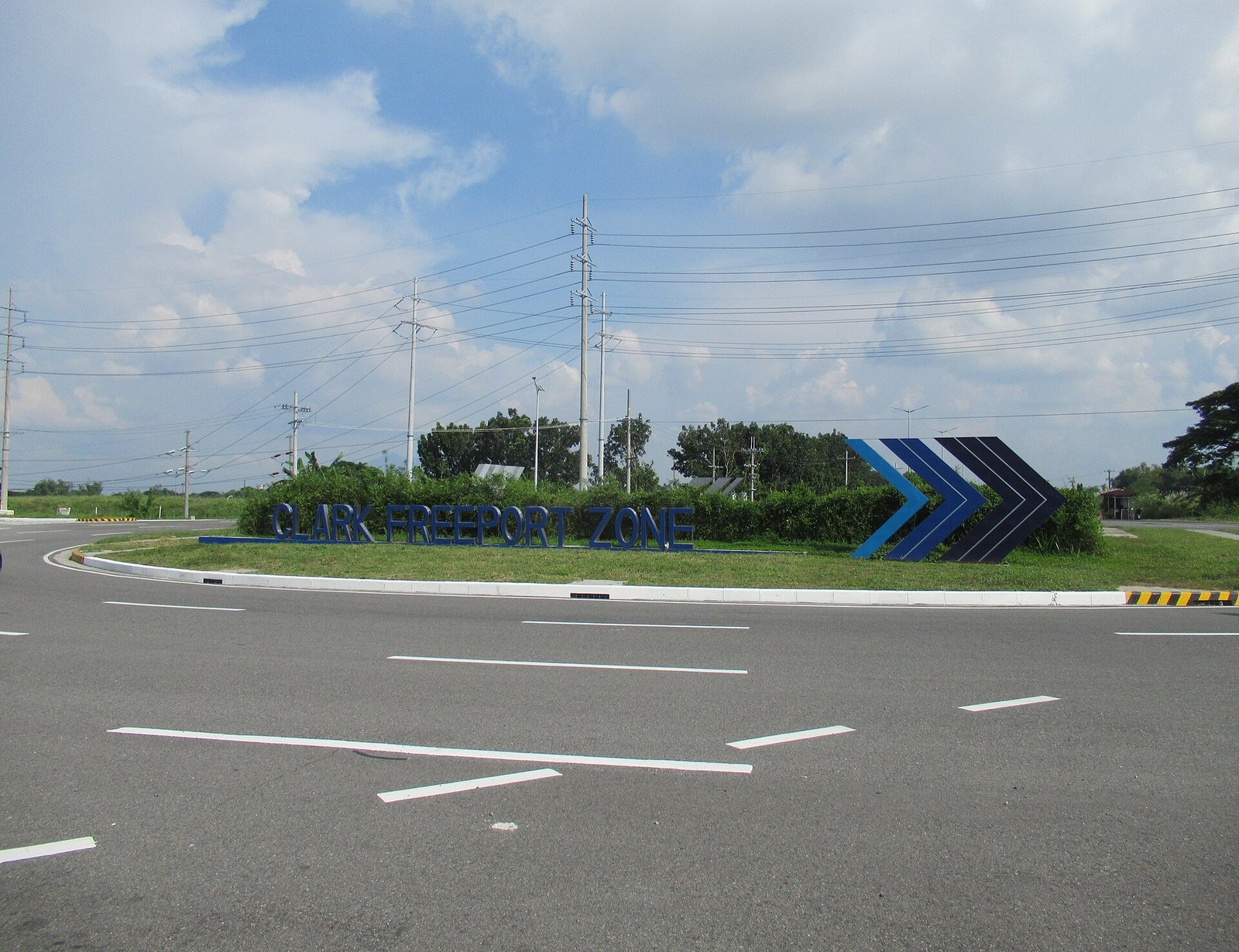
Part of what makes this verification process easier in Clark specifically is the setting itself. The schools operate inside the Clark Freeport Zone, a managed, secure economic zone rather than an open tourist strip — a former U.S. air base turned planned district. It's a quiet, orderly environment built for people who are actually here to concentrate, not to party, which lines up naturally with the kind of institution that takes accreditation seriously in the first place. If you're also weighing where in the Philippines to study, it's worth comparing Clark against Cebu and Baguio directly.
FAQ
What happens if I study without a valid SSP?
Studying without proper immigration processing can put your legal stay in question and may cause problems if your status is ever checked or if you try to extend your program. It's a risk that's entirely avoidable by confirming SSP processing before enrollment.
How can I check a school's accreditation from outside the Philippines?
Ask the school directly for its accreditation details and how it handles the SSP, and cross-check by looking for independent mentions of the school — forums, past students, or membership in a recognized association like CAESA. A legitimate school will not make this hard to confirm.
Does a licensed school cost more than an unlicensed one?
Not necessarily — licensed schools across the CAESA network remain far more affordable than equivalent programs in Ireland, Malta, Canada, or Australia. A price that looks unusually low compared to similar programs is a signal to ask more questions, not a bargain to jump on.
Is Clark safe for someone traveling and studying alone?
Yes — the Clark Freeport Zone is a managed, monitored area, and choosing a properly licensed school adds another layer of structure and accountability to a solo trip, rather than leaving you to navigate everything informally.
Once the licensing question is settled, the rest is simply picking the program that matches your goals. See the 8 CAESA schools to compare styles and specialties, or get in touch if you'd like help confirming what fits you best.
Read moreESL Philippines: What It Means and How to Choose a Course
Meet the 8 Schools →