
Resort-Style English School Philippines: 6 Checks
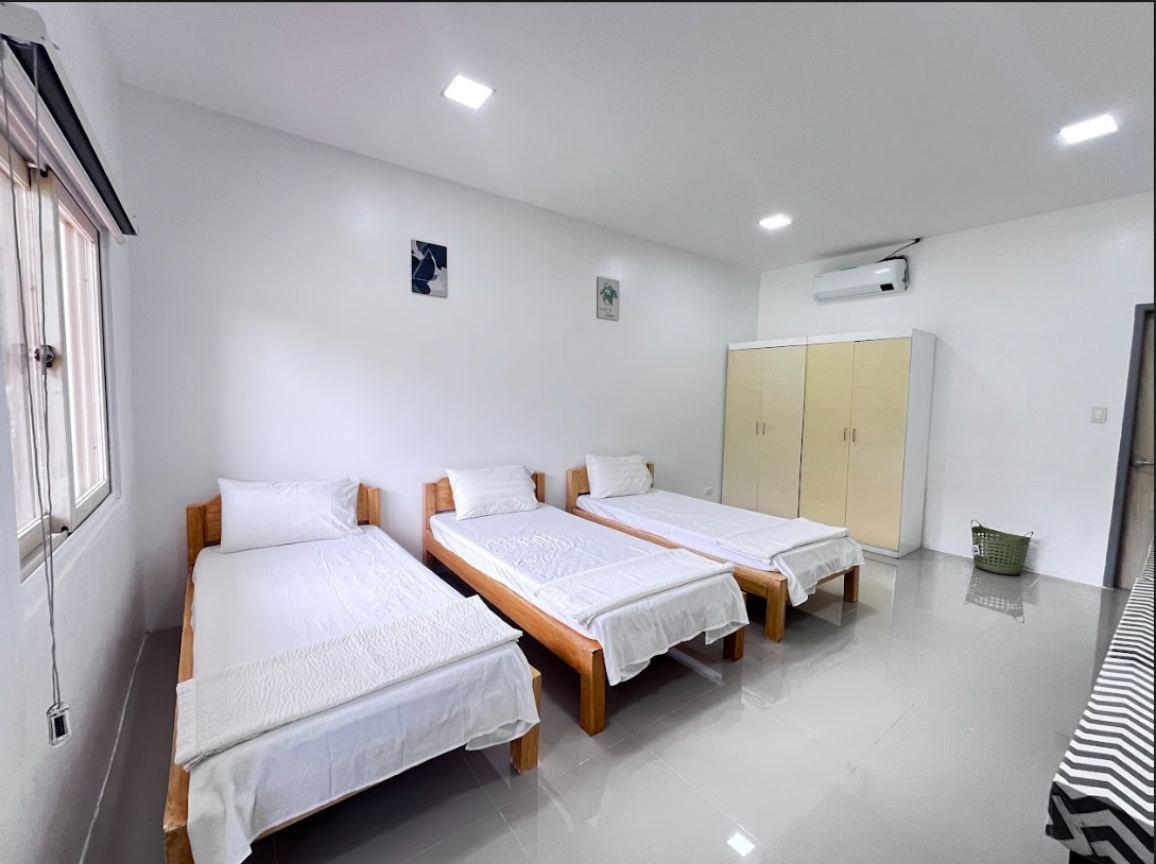
"Resort-style" is a description of a campus, not a description of a course. A garden, a pool and a low-rise block of rooms can make twelve weeks far more bearable — and none of that tells you how many minutes a day you will spend speaking English. Treat the photographs as a comfort question and ask the teaching questions separately.
Here are the six checks that decide whether a resort-style campus is the right call for you.
To see which school fits which goal, compare the best English schools in the Philippines — 8 licensed schools in Clark.
Check 1: what the phrase actually covers
In Philippine language-school marketing, resort-style usually means some combination of low buildings rather than a tower, outdoor space between them, a pool, and rooms closer to hotel layout than dormitory layout. It is a style of campus, and it varies enormously from school to school. It does not imply a particular lesson count, a particular rule set, or a particular standard of teaching.
Ask for a plan of the campus and recent photographs with dates, not a gallery. Facilities are added and closed over time, and a picture with no date tells you nothing about what exists this month.
Check 2: the room, not the grounds
You will spend more hours in your room than beside the pool. The questions that matter are unglamorous:
- How many people share it, and are the beds singles or bunks?
- Is the bathroom inside the room or along a corridor?
- Is there a desk you can actually work at, with a lamp and a socket within reach?
- How is air conditioning controlled — per room, or centrally on a timetable?
- What is included: bedding, towels, cleaning, laundry, water, a fridge?
Get the answers in writing for the specific room type you are booking, since these differ by building as well as by school. The wider trade between on-campus and outside accommodation is in dorm or outside housing, and what daily life in a campus room is like is in dormitory life at a Clark English school.
Check 3: whether the pool is open, and when
A pool that is drained for maintenance, closed after a certain hour, or shared with a hotel operation is not the pool in the photograph. The same applies to gyms, basketball courts and study rooms. Ask what the current opening hours are and whether anything is closed this season. Facilities open and close, and the only reliable answer is a recent one from the school itself.
Check 4: resort campus, resort schedule?
Here is where the phrase misleads people most. A relaxed-looking campus can run a strict timetable, and a plain-looking one can be flexible. The two are unrelated.
| What you are choosing | What it actually controls |
|---|---|
| Campus style | How pleasant the hours outside class feel |
| Course format | How many one-to-one and group hours you get |
| Rule set | Curfew, sign-out, attendance, evening study |
| Room type | Sleep, study space, privacy, cost |
Decide the second and third of those on their own merits. The spectrum of rule sets is laid out in sparta vs semi vs flexible.
Check 5: food, because it is three times a day
Most campuses include meals in the package, which is a large part of why the budget is predictable. Whether you enjoy them for twelve weeks is a separate question. Ask what the weekly menu rotation looks like, whether vegetarian or halal options are standard or on request, and what the nearest alternatives are if you need a break from the canteen. The subject in more detail is in what you eat at a Clark English school.
Check 6: the quiet costs of a pleasant campus
A resort-style campus can sit further from shops and transport than a city-centre building, which turns small errands into planned trips. It can also cost more per week for the same lesson count. Neither is a reason to avoid it — but price the room type you want against a plainer one at the same school and see what the difference is actually buying.
Government fees sit outside all of this and do not change with the campus: the SSP is ₱7,800 per application, the ACR I-Card ₱4,500 if your stay passes 59 days, and visa extensions ₱3,000–6,000 each. Confirm current requirements with your school, since the rules can change.
Short answers
Is a resort-style campus worth paying more for?
If you are staying eight weeks or longer, the comfort of the hours outside class is a real variable, not a vanity one. For two weeks it matters much less.
Do these campuses have fewer rules?
There is no reliable link. Ask for the written rule set of the specific school rather than inferring it from the architecture.
Will I actually use the pool?
Honestly, less than you expect on weekdays and more than you expect at weekends. Ask about opening hours before you let it influence the price you pay.
Are the photographs accurate?
Often, but they are also the best five minutes of the best day. Ask for a recent walkthrough video and the date it was taken.
The short version
Judge the campus on comfort and the course on lesson hours, and never let one answer for the other. Confirm the room type, the opening hours of whatever facility sold you on the place, the meal arrangement, and the written rule set — all for the specific school, all in writing. Campuses, facilities and inclusions differ considerably across the eight CAESA member schools in Clark, so verify with that school through a partner agency. More on narrowing the shortlist is in our choosing a school section.
Read moreESL Philippines: What It Means and How to Choose a Course
Meet the 8 Schools →