
Dorm, Meals and Laundry: 10 Questions to Ask
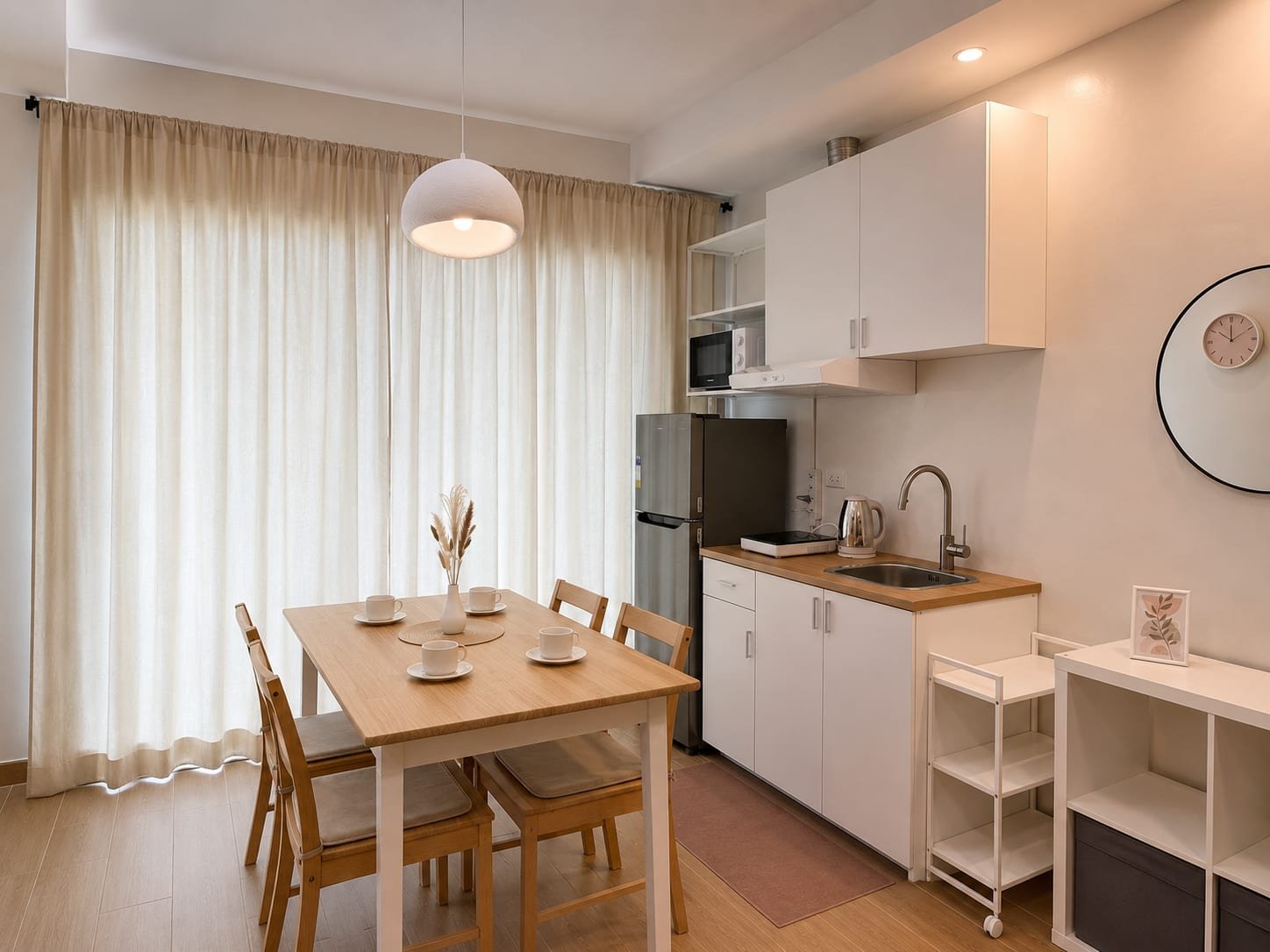
Students compare curricula carefully and living arrangements barely at all, then spend the month talking about the living arrangements. Dorm rooms, meals and laundry are where the day actually happens, and they vary far more between schools in Clark than teaching methods do.
That variation is the important part. There is no standard Philippine language-school dormitory, no standard meal plan, and no standard laundry arrangement — facilities, room types and services differ from school to school and change over time. So the useful thing is not a description of a typical school; it is a list of questions specific enough that the answers cannot be vague.
Ten of them, in the order they will affect your day.
The room, and the person in it
1. What room types exist for my dates, and what is the price difference? Single, twin, triple and larger rooms are all common somewhere, but which are available in a given month depends on the school and on how full it is. Ask about your specific weeks rather than in general.
2. If I am sharing, how is a roommate assigned — and can it be changed? This is the single largest variable in your comfort, and it is decided by someone else. Ask whether nationality mix is considered, whether adults are housed separately from younger students, and what the process is if it genuinely does not work. A school with a clear answer has handled it before.
3. What is the bathroom arrangement, and who cleans the room? Private, shared between two rooms, or shared per floor; cleaned by staff on a schedule or by you. Neither answer is a problem. Discovering it on arrival is.
For adults, sharing is not automatically the wrong choice — it produces conversation practice a single room does not, at the cost of control over your evenings. The trade is set out in dorm versus outside accommodation, and living well alongside people from four or five countries is covered in multinational roommate etiquette.
The food question, asked properly
4. Which meals are provided, on which days? Not "are meals included" — the useful question is the grid. Weekday breakfasts, weekend dinners and holidays are exactly where arrangements differ, and where budgets quietly grow.
5. Can dietary requirements be accommodated, and how? Vegetarian, halal, allergies, medical diets. Ask what it means in practice — a separate dish, a modified dish, or a suggestion that you eat out. Any of those can work if you know in advance; none works as a surprise.
6. Is there anywhere to store or prepare food? Access to a fridge or a kettle changes the shape of a month more than people expect. Provision differs by school, so ask rather than assume.
Filipino food is worth arriving curious about — it is distinctive, often sweeter and more sour than visitors expect, and rice-centred in a way that surprises Europeans in particular. What that means day to day is in meals and food at Clark English schools.
Laundry, cleaning and the small logistics
7. How does laundry work — included or paid, weekly or on request, and is there a weight or item limit? Some arrangements include a set number of loads; others charge by weight; others leave it to you and local laundry shops, which are widely available, usually priced by weight, and worth checking a current rate for rather than assuming one. All are workable. The reason to ask is planning: it determines how many days of clothes you pack, and packing lightly for a hot climate depends entirely on knowing the answer. See the packing checklist and what to buy locally instead of packing.
8. What is the internet situation in the room, and what happens when it drops? For anyone doing any remote work, this is not a comfort question but a feasibility question. Ask about the room specifically rather than the building, and plan a mobile-data fallback regardless — see SIM cards, wi-fi and internet and, if you are working while studying, remote work and English study in Clark.
9. What are the rules on going out, guests and quiet hours? Schools run on a spectrum from strict to entirely flexible, and adults sometimes arrive assuming a hotel and find a study environment with a curfew — or assume structure and find none. Neither is wrong; the mismatch is. How these systems tend to work is in school rules, curfews and point systems, and the strict end of the spectrum is described in Spartan-style immersion for adults.
When you get sick — because at some point you might
10. What happens if I am ill, at nine in the morning and at nine at night? Ask the mundane version: who do I tell, does anyone go with me, is there a clinic or hospital the school normally uses, what happens to my classes and are missed lessons made up.
The commonest problems for new arrivals are unglamorous — stomach upsets in the first fortnight, dehydration, and a heat-and-air-conditioning cold. Pharmacies are widely available and consultations are typically inexpensive by Western standards, though costs vary by facility, and the practical route to care is set out in getting sick in Clark. Prevention, which is mostly water, sleep and caution with the first week's food, is in staying healthy while you study.
Bring a supply of any regular medication, with the prescription, rather than expecting to source an identical product locally.
What the answers actually tell you
Read the pattern, not just the content. A school that answers ten specific questions in writing, promptly, including the parts that are less flattering, is a school that has answered them many times before and has systems behind them. A school that responds with brochure language to a question about laundry weight limits is telling you something about how the rest of the month will go.
And ask a second time about anything that sounds like a facility rather than a service. Facilities change, get renovated, or close. The question "is that available in October, for my dates?" is a fair one and nobody sensible minds being asked.
The short version
Room type and roommate policy, the meal grid, laundry terms, room internet, evening rules, and what happens when you are ill. Ten questions, answered in writing, and your ordinary Tuesday stops being a guess. More on daily life is in our student life section, and a fuller picture of on-campus living is in dormitory life at a Clark English school.
The eight CAESA member schools in Clark are government-accredited and enrol through partner agencies. If you want these questions answered for a specific set of dates, the contact form is the place to send them.
Read moreESL Philippines: What It Means and How to Choose a Course
Meet the 8 Schools →