English School in Clark, Philippines: What the Freeport Zone Is Like and Who It Suits
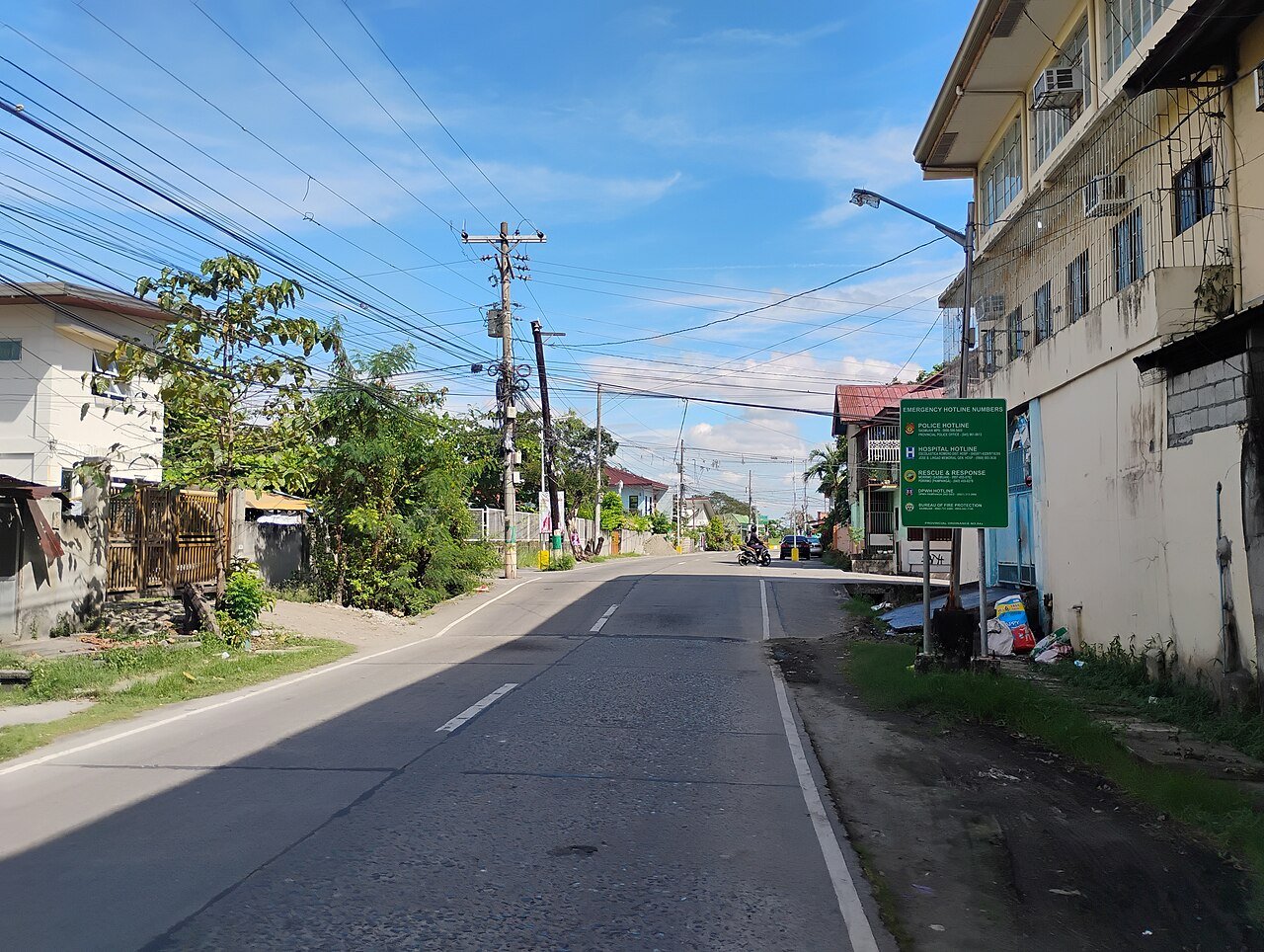
If you are looking at an English school in Clark, Philippines, the useful first fact is geographic. Clark is not a resort town and not a capital city. It is the Clark Freeport Zone in Pampanga, central Luzon — a former United States air base converted into a special economic zone, with wide planned roads, low density, its own zone administration and security, and Clark International Airport (CRK) immediately adjacent. Schools sit inside or beside that zone, which is why the arrival day is short and the daily environment is quiet.
We are an association of accredited schools based there, so read this knowing our position. What follows is written to help you decide correctly rather than to decide for you — a student who picks the wrong city is unhappy for a month and tells everyone, which helps nobody.
To see which school fits which goal, compare the best English schools in the Philippines — 8 licensed schools in Clark.
What the place actually feels like
Planned and low-density. The zone was laid out as a military base, so it has broad avenues, open green space and very little of the compressed street life of a Philippine city centre. Some students find it calm. Others find it dull. Both reactions are legitimate and you should guess honestly which one is yours.
Managed, with a visible security presence. The freeport has its own administration and controlled access. For an adult abroad for the first time, or for a parent sending a teenager, that everyday predictability is the point. It is not a guarantee of anything — ordinary precautions still apply anywhere — but the environment is materially different from an open city district. More detail in the Clark Freeport Zone, safety explained.
Hot lowland climate. Clark is inland at low elevation. Expect heat and humidity for most of the year, a pronounced wet season, and air conditioning indoors. Being inland means typhoons are usually felt as heavy rain rather than coastal storm surge, though flights and roads can still be disrupted. Month-by-month detail is in the Clark weather guide and what the typhoon season changes inland.
Few walkable distractions. Restaurants, malls, golf courses and hotels exist, but they are spread out and generally reached by vehicle. There is no beach strip and no dense nightlife district inside the zone. For focus, that is an advantage; for spontaneity, it is not.
The airport, which is the real differentiator
Most of what makes Clark distinct comes down to one thing: the international airport is next door, and schools are typically a short drive from the terminal rather than hours away.
That matters more than it sounds. It removes a long road transfer at both ends of your trip, which on a four-week course is a meaningful share of your time and energy. It also matters if you might need to fly home at short notice. The counterweight is route availability — CRK has fewer international routes than Manila, and schedules change by season. Many students fly into Manila (NAIA) instead and take a 1.5–3 hour drive. Check current routes before assuming either. The comparison is in Clark airport versus Manila NAIA.
Clark compared with the other usual choices
| Clark | Cebu | Baguio | Manila | |
|---|---|---|---|---|
| Setting | Managed inland freeport zone | Island city with beach access | Highland university city | Dense capital |
| Climate | Hot, humid, inland | Hot, humid, coastal | Cool highland, wet in season | Hot, humid, dense |
| Airport transfer | Adjacent; short drive | Airport on the island | Long mountain road transfer | In the city, heavy traffic |
| Weekends | Golf, Mount Pinatubo, day trips | Beaches, diving, islands | Mountains, markets, cafés | City culture, shopping |
| Distraction level | Low | High | Low | High |
| Best for | Short courses, tight schedules, focus | Learners who want sea and social life | Heat-sensitive learners, long stays | Learners who want a big-city base |
Fuller versions: Clark versus Cebu versus Baguio, Cebu or Clark in five questions, what Baguio's altitude buys, and Clark versus Manila for adult students.
What a study week looks like there
The Philippine format is the reason most students come, and it is the same in any of these cities: long daily teaching hours with a high proportion of one-on-one lessons, often with a dormitory bed and meals inside the same fee. Exact timetables, group sizes and meal arrangements differ by school, so these are questions to ask rather than assumptions to make.
Practically, a weekday is a block of individual lessons, some group classes, and self-study, with evenings either structured or free depending on the school's style. Schools range from strictly disciplined to largely self-directed, and that choice matters more to your result than the city does — sparta versus flexible covers it. The daily texture is described in a day inside an immersion programme and your first week.
Who Clark fits
- Adults on a short, tight course. Four to eight weeks, no time to lose to transfers, needing to stay reachable for work. Clark's proximity to its airport is worth real money here.
- Learners who know they get distracted. If a beach fifteen minutes away would end your study plan, a quiet planned zone is a structural help rather than a sacrifice.
- First-time solo travellers and families sending students. The managed environment is the specific reassurance. Studying with your family covers the family case.
- Professionals combining study with remote work or golf. Reliable indoor environments, courses nearby, and the time zone suits much of Asia. See remote work and study and golf and English study.
Who should choose somewhere else
Said plainly, because getting this wrong is expensive:
- If heat genuinely stops you working — not "you would prefer cooler", but you cannot concentrate at 33°C — Baguio's highland climate is a better buy even with the long road transfer.
- If sea, diving and weekend island travel are part of why you are going, Cebu gives you that and Clark does not.
- If you want a big, dense city with museums, large-scale nightlife and constant street life, Clark will feel empty.
- If your flight routing to CRK is bad or expensive from your home city, the airport advantage disappears and the comparison resets.
What does not change with the city
Whichever city you choose in the Philippines, the same non-negotiables apply.
The school must be government-accredited and able to process your SSP (Special Study Permit), ₱7,800 per application — this is a government fee and should not differ by location. Stays beyond 59 days bring the ACR I-Card at ₱4,500, and visa extensions run roughly ₱3,000–6,000 each. Government fees change over time, so confirm current amounts with the school rather than budgeting from a figure you read online. Accreditation is a pass-or-fail gate everywhere: how to verify it.
Also unchanged by city: written refund and cancellation terms, stated group sizes, teacher qualifications, and what happens if you want to change course type after arriving. The checklist is in documents to request before enrolling and the general screen is seven tests for choosing a school.
Practical things to settle before you book
- Accommodation type. Dormitory inside the school, or a room outside it? The trade-offs.
- Getting around. Clark is drive-scale rather than walk-scale; know the options and rough fares. Transport and fares.
- Connectivity. Sort a SIM and understand the internet situation if you will be working. SIM, wifi and internet.
- Season. Match your dates to the climate you can tolerate. Best time to study by season.
- Weekends. Know in advance what is reachable, so free days do not evaporate. Weekends in Clark and weekend trips.
The short version
- An English school in Clark, Philippines means a managed, low-density freeport zone with an international airport immediately next door.
- The genuine advantages are a short arrival, a predictable environment, and few distractions.
- The genuine costs are heat and humidity, a car-scale rather than walk-scale city, no beach, and fewer direct flight routes than Manila.
- Clark suits short, focused courses, first-time solo students, and professionals on a tight schedule. Baguio suits heat-sensitive learners; Cebu suits learners who want the sea.
- Course format and school style matter more than the city — ask about hours, one-on-one share and group sizes everywhere.
- Accreditation and written contract terms are pass-or-fail wherever you go. Government fees are fixed by government, not by school, and should be confirmed as current.
More comparisons are in our choosing a school section. The eight CAESA member schools in Clark are government-accredited and enrol through partner agencies; the contact form is open whether or not Clark turns out to be your answer.
Read moreESL Philippines: What It Means and How to Choose a Course
Meet the 8 Schools →